Sleep & Pain Guides
The questions that come before the purchase — firmness, memory foam versus hybrid, and what actually helps a bad back at night.
Before you spend money, there are a few questions worth getting straight: how firm a mattress should be for a bad back, whether memory foam actually helps or just feels nice, and how foam and hybrids really differ. These guides answer them with the published evidence rather than sales copy, and each one points you to the right roundup once you’ve decided.
They’re short on purpose. The competition writes 6,000 words to say what fits in 1,500; we’d rather answer the question and let you get on with it.
Three of them answer the question that comes before any purchase — how to lie down tonight: our guides to sleeping with sciatica, sleeping with hip pain and sleeping with neck pain each set out the positions first and name the two or three cheap objects that make them hold.
Everything in Guides
What Mattress Firmness Is Best for Back Pain?
The short answer is medium-firm, and there's a well-known trial behind it. Here's how to find your spot on the scale.
Is Memory Foam Good for Back Pain?
It depends on the firmness and the sleeper. When memory foam helps a bad back, when a hybrid is the better call.
Memory Foam vs Hybrid for Back Pain
The real trade-off — contouring pressure relief versus coil support — and which suits your body and sleep position.
What Mattress Do Chiropractors Recommend?
There is no official chiropractic mattress list. Here is what the profession actually says, and what it means for your bed.
Mattress or Topper for Back Pain?
A topper fixes a bed that is too firm. It cannot fix one that sags. How to tell which problem you have before you spend.
Adjustable Bed Positions for Back Pain
Zero gravity, knee lift and head elevation — what each position does for a lower back, and how to dial one in.
Is a Mattress in a Box Good for Back Pain?
Compression is a shipping method, not a quality grade. What it does and doesn't change about support — plus off-gassing.
Why You Wake Up With Lower Back Pain
Pain that is worst in the first hour and eases as you move points at your night, not your day. Here is how to read that pattern.
The Best Sleeping Position for Back Pain
Back with a pillow under the knees, or side with one between them. What each does mechanically, and how to make it stick.
How Often Should You Replace a Mattress?
The usual answer is six to eight years, but age is the weakest signal. Four tests that beat the calendar.
How to Fix a Sagging Mattress
Some sags are the bed and some are the base underneath it. Only one of those is worth spending money on.
How Long Does It Take to Adjust to a New Mattress?
Two to four weeks is normal, and a new bed often hurts before it helps. How to tell adjustment from a genuine mistake.
What Pillow Loft Do You Actually Need?
Loft is the one pillow spec that decides whether your neck stays neutral — and it depends on your mattress as much as your body.
Best Gifts for Someone With Back Pain
Sleep gear that helps a bad back and is safe to buy for someone else — because a mattress is not, and a knee pillow is.
Top pick
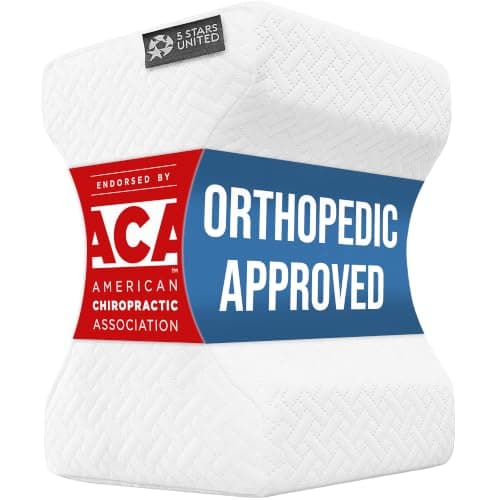
5 STARS UNITED Knee Pillow for Side Sleepers
$27.95 · See it on AmazonPrice as of October 22, 2026. #ad How we’re funded
Black Friday & Cyber Monday Mattress and Sleep Gear Deals 2026
What historically discounts in this category and what rarely does, what to buy now versus wait for, and our current top picks with live prices. Deals are posted here when they go live in November.
Top pick
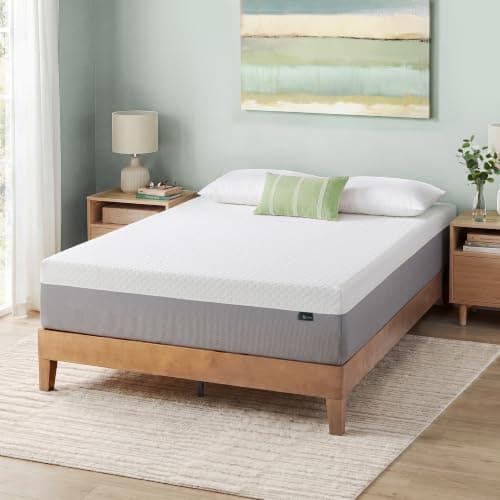
Zinus 12" Green Tea Essential Memory Foam
$219.99 · See it on AmazonPrice as of October 22, 2026. #ad How we’re funded
Best Sleep Gifts Under $50
Certified positioning pillows and low-risk comfort upgrades for a gifter who does not know the category — what each one does, who it suits, and what to check before you buy.
Top pick
5 STARS UNITED Knee Pillow for Side Sleepers
$27.95 · See it on AmazonPrice as of October 22, 2026. #ad How we’re funded
Best Sleep Gifts Under $150
The tier where an adjustable pillow, a certified topper or an organic protector becomes a gift that gets used every night — and the one fact you need before ordering each.
Top pick
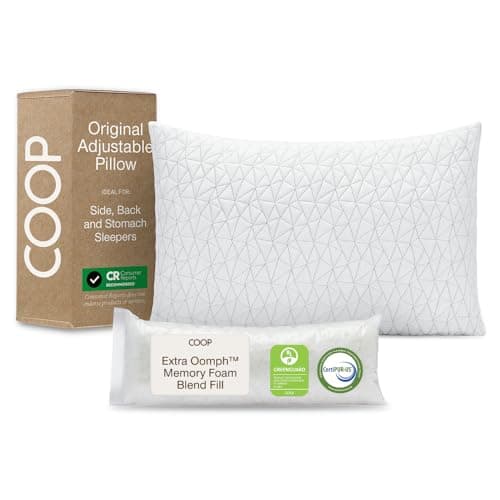
Coop Home Goods Original Adjustable Pillow
$89.00 · See it on AmazonPrice as of October 22, 2026. #ad How we’re funded
Best Luxury Sleep Gifts (No Budget)
Where more money genuinely buys a better night — TEMPUR material, certified organic latex, an adjustable base — and where it only buys a bigger box. Includes the one way a mattress can be a gift.
Top pick
TEMPUR-Pedic TEMPUR-Adapt 3" Topper
$359.00 · See it on AmazonPrice as of October 22, 2026. #ad How we’re funded
Best Gifts for Someone With Neck Pain
Pillow height is the whole problem, and you cannot measure their neck. Adjustable picks that let them fix it themselves, and the contour pillows to give only when you know how they sleep.
Top pick
Coop Home Goods Original Adjustable Pillow
$89.00 · See it on AmazonPrice as of October 22, 2026. #ad How we’re funded
Best Gifts for Someone With Sciatica
Sciatic pain flares when the lower back sags or twists overnight. The positioning pillows that hold the pelvis level, from a knee pillow to a leg wedge — and the base that should be a joint decision.
Top pick
5 STARS UNITED Knee Pillow for Side Sleepers
$27.95 · See it on AmazonPrice as of October 22, 2026. #ad How we’re funded
Latex vs Memory Foam for Back Pain
Two foams that behave in opposite ways under a spine. Which one suits your back depends mostly on how much you move at night.
Does Your Bed Base Matter for Back Pain?
Box spring, platform, slats or the floor — the thing under your mattress decides whether it can do its job. And slat spacing is the spec nobody checks.
Do You Need a Special Mattress for an Adjustable Bed?
Usually not — but it depends on how your mattress is built, not what it is sold as. What bends, what does not, and the warranty check you cannot run afterward.
How to Tell If a Mattress Has Fiberglass
No maker prints “contains fiberglass” on the box. Here are the label phrases, the care-tag warning and the one question that gets a straight answer.
New Mattress Smell: What Off-Gassing Actually Is
That smell is VOCs leaving new foam. What the certifications actually limit, how long it should last, and when it is a reason to send the bed back.
Mattress Warranties and Sleep Trials, Explained
A ten-year warranty usually covers less than you think, and the sag depth it names is the number that decides every claim. Read it before you buy.
How to Sleep With Sciatica
Which side to lie on, where the pillow goes, and why the fetal position helps some people and hurts others. The positions first, then the two cheap objects that make them stick.
How to Sleep With Hip Pain
Why a sore hip is worse at night, which side to sleep on, and what to put between your knees. Then the honest read on whether your mattress is the cause.
How to Sleep With Neck Pain
Back or side, never stomach; the pillow height that keeps the neck level; and the three symptoms that mean a pillow is not the answer.
Will a Mattress Protector Stop Fiberglass?
The short answer is no — not the kind most people own. What a fitted protector actually blocks, what a full encasement does differently, and why neither is the fix people hope for.
How to Sleep With Shoulder Pain
Why a sore shoulder is worst at 3 a.m., which side to lie on, and the two pillows that do most of the work. Then the honest read on whether your mattress is the cause.
How to Sleep With a Herniated Disc
Where the pillow goes matters more than which side you pick. The positions that unload the lower back, what changes when the disc is in your neck, and the honest read on your mattress.
How to Sleep With Arthritis Pain
Sore joints get worse at night for a reason that has nothing to do with your mattress. What the bed can fix, joint by joint, and what it cannot.
How Often Should You Replace a Pillow?
Every article gives you a number. No authority publishes one. What the sources actually say, and the four tests that tell you the answer for your pillow.
Do Kids' Mattresses Have Fiberglass?
Some do, and the rule that puts it there does not exempt a child's bed. What the three kids' twins we cover state, and how to read a listing that says nothing at all.
Is Memory Foam Toxic?
Three different worries get bundled into one question. What memory foam is, and exactly what CertiPUR-US, GREENGUARD Gold and OEKO-TEX each cover and leave out.
Do I Need a Mattress Protector?
Usually yes, and the reason is less about hygiene than about the clause in your warranty. The four cases where it earns its money, and the cases where it does not.
How Long Does a Mattress Topper Last?
Every article gives you a number. None of these listings publishes one. The failure mode, the four tests that answer it for your topper, and what changes the answer.
Mattress Pad vs Mattress Topper
Three different products get sold under both names, and only one of them changes how your bed feels. How to tell them apart before you buy the wrong one.
How To Sleep With Spinal Stenosis
Stenosis pain eases when you lean forward and worsens when you stand straight. How to reproduce that in bed, position by position, and what to put under your knees.
Does Memory Foam Sleep Hot?
Yes, and the reason is the mechanism you bought it for. What heat does to support, what an infusion changes, and which layer of your bed is actually the hot one.
Is My Pillow Too High or Too Low?
Both faults give you a sore neck by morning, so the symptom alone will not tell you which way to move. Four checks that will.
How Often Should You Replace a Mattress Protector?
The part that fails is the part you cannot see. Three tests for whether yours is still waterproof, and why it matters to your mattress warranty.
Why Does Arthritis Hurt More at Night?
Joints swell when they stop moving, and sleep is the longest still stretch of your day. The mechanism, and the four bedroom variables that change it.

Where to start
If you only read one, make it the firmness guide— firmness is the single setting most tied to the evidence for back pain, and getting it right matters more than the brand on the label. From there, is memory foam good for back pain? and memory foam vs hybrid help you pick a construction that suits your body and how you sleep.
Guides feed the money pages
Each guide ends by pointing you to the relevant roundup — the best mattresses for back pain, the best toppers, and the material-safety pages under Non-Toxic & Certified. Read the guide, then act on it.
Holiday shopping: gifts and Black Friday
Two kinds of page here are written for the season rather than for the sleeper. The gift guides re-read the same research for someone buying for someone else — sorted by budget (under $50, under $150, no budget) and by recipient (back pain, neck pain, sciatica). And the Black Friday & Cyber Monday hub sets out what has historically discounted in this category and what has not, with live prices on our top picks and no invented numbers — verified deals are posted there when they go live in November.
Frequently asked questions
What's the single most important factor for back pain?
Firmness. The evidence points to medium-firm for most people, and getting the firmness right matters more than the brand, the material buzzwords, or the price. Start with our firmness guide.
Do I need memory foam specifically?
No. Memory foam contours and relieves pressure, which helps some sleepers, but a hybrid's coil support is better for others — heavier bodies, back sleepers, couples. Our memory-foam-vs-hybrid guide sorts out which is right for you.
Sources
- Kovacs et al. — Effect of firmness of mattress on chronic non-specific low-back pain (The Lancet, 2003) — Randomized double-blind trial (n=313): medium-firm mattresses outperformed firm for low-back pain and disability (accessed July 23, 2026)
- Radwan et al. — Effect of different mattress designs on sleep quality, pain reduction and spinal alignment (Sleep Health, 2015) — Systematic review of controlled trials: a medium-firm, self-adjusted mattress is optimal for sleep quality and spinal alignment (accessed July 23, 2026)