Do Kids' Mattresses Have Fiberglass?
Some do, and the rule that puts it there does not exempt a child's bed. Here is what the three kids' twins we cover state, and how to read a listing that says nothing at all.
How this is funded: we earn an Amazon commission if you buy through our links, at no extra cost to you. It never changes which product we recommend, and we’ll tell you plainly when to skip one. Full disclosure.
The short answer
Some children’s mattresses contain a glass-fiber fire barrier and some do not, and there is no rule, size or age bracket that decides it for you. What there is, on a bed you are about to buy, is a sentence on the listing — and all three of the children’s twins we cover state 100% fiberglass-free constructionexplicitly: the Nectar Kids 8", the EGOHOME 6" and the MLILY EGO 6". That is a better rate than the adult field we cover, where six of nine beds state it.
On a bed you already own, the answer is usually that the listing says nothing — and nothing is not the same as no. The rest of this page is about why the barrier is in there in the first place, why a children’s bed is not exempt, and what the published claims do and do not cover.
Why fiberglass is in mattresses at all
Not as a filler, and not to save money on the comfort layers. It is there because of flammability law. The Consumer Product Safety Commission’s guidance for mattress manufacturers sets out the federal open-flame standard at 16 CFR Part 1633, which limits the size of the fire a mattress set produces in a 30-minute test. The crucial detail is what the standard does not do: it is a performance requirement, and it does not specify which fire-barrier material a maker uses to meet it.
So every mattress sold in the US has some way of passing that test. A woven glass-fiber sock around the foam core is one of the cheapest ways, which is why it became the industry default on inexpensive foam beds. Wool, viscose and treated cellulose barriers also pass, and they cost more. A bed advertised as fiberglass-free has used one of those instead — or, in the organic tier, has met the rule on wool because the certification prohibits the alternatives.
Does the rule apply to a child’s bed?
Yes. The standard applies to mattresses and mattress sets sold in the United States, and nothing in it carves out small sizes, bunk-bed mattresses or beds marketed for children. A 6-inch all-foam twin has to pass the same 30-minute open-flame test a 14-inch queen does, which means it has the same barrier problem to solve — with less material to hide the solution in.
That matters because of a piece of intuition parents understandably have: that a thin, simple, inexpensive children’s mattress is less likely to contain anything industrial. The opposite reasoning is closer to the truth. The cheaper the bed, the more pressure there is on the barrier to be the cheap option, and a thin foam core gives the maker nowhere to put a thick wool layer.
What the three kids’ twins we cover actually state
We only cover products we have resolved to a live listing, and we only record a certification or a construction claim where the listing itself states it. Here is what each of the three says about this specific question.
Nectar Kids 8" twin.States 100% fiberglass-free construction, CertiPUR-US certified foams and OEKO-TEX Standard 100 certified fabrics — all three. It also publishes a 365-night home trial, which is the only trial among the three and the only route back if you decide you do not trust the bed. No warranty term is stated, which we record as not published.
EGOHOME 6" twin.States fiberglass-free alongside CertiPUR-US and OEKO-TEX Standard 100, publishes a 10-year limited warranty, and is explicit that opened mattresses cannot be returned. So the documentation is strong and the escape route is weak — a combination worth knowing before you order rather than after.
MLILY EGO 6" twin.States fiberglass-free and CertiPUR-US, with OEKO-TEX Standard 100 named in the bullets, and a 10-year limited warranty. Its listing says in capitals that there is no trial period and opened mattresses are not returnable. It is also the one whose internal layer thicknesses, as printed in the bullets, add up to more than the stated 6-inch profile — so we record the internal build as not published rather than repeat numbers that contradict each other.
What “fiberglass-free” does not tell you
None of the three names the barrier it uses instead. That is the gap in every fiberglass-free claim at this price, and it is why we treat the phrase as a maker’s statement rather than a verified fact: there is no certificate to look up, no third party attesting to it, and no published description of what passes the test in its place. It is a claim a company is accountable for making, which is worth something, and it is not a standard.
Two more traps worth naming, because certification is where this question usually goes wrong:
CertiPUR-US does not cover the barrier. Its own FAQ is clear that the program certifies the flexible polyurethane foam, not the whole mattress, and that it does not address fiberglass fire barriers. A bed can be fully CertiPUR-US certified and have a glass-fiber sock around that certified foam.
OEKO-TEX Standard 100 does not either. It tests materials against a list of harmful substances. Glass fiber is not a chemical on that list; it is a mechanical irritant in the wrong place. The mark tells you something real about dyes and residues and nothing about the barrier.
The one tier where the question genuinely closes is organic: GOTS and GOLS prohibit the materials a glass-fiber barrier is made from, so those beds pass the flammability rule on wool. We cover two of them — and both are adult sizes. There is no GOTS or GOLS certified children’s twin in our registry, so for a child’s bed you are relying on the maker’s sentence. Our fiberglass-free by budget page sets out that tier difference in full.
How to check the bed your child already sleeps on
Read the tags; do not open anything. A care instruction that tells you not to remove the cover is the strongest single signal that there is something inside it you are not meant to disturb. A fiber content line on the law tag naming glass fiber is conclusive. The listing is worth re-reading too: silence is not reassurance, but an explicit fiberglass-free sentence from a brand that has to stand behind it is useful.
Our full identification guide walks the four signals in order, and it opens with the one instruction that matters most here: do not unzip the cover to look. A sealed barrier is a barrier. An opened one is a cleanup problem that can cost more than the mattress.
If you are buying rather than checking
The three children's twins we cover, all of which state 100% fiberglass-free construction on the listing plus both a foam and a textile certification. They differ on thickness, on firmness and — most usefully — on whether you can send the bed back.
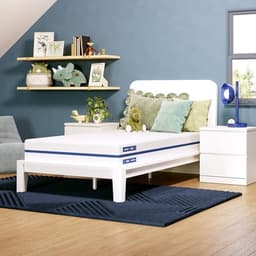
Nectar Kids 8" Twin Memory Foam (2-sided)
Parents who want the certification set, the fiberglass statement and a trial they can actually use
The best-documented of the three and the only one with a way out: states fiberglass-free, CertiPUR-US foams and OEKO-TEX fabrics, plus a 365-night home trial. Two-sided, with a firmer side listed for ages 3 to 7 and a softer one for 8 and up.
$299.00 · See it on AmazonSee the roundupPrice as of October 22, 2026. #ad How we’re funded
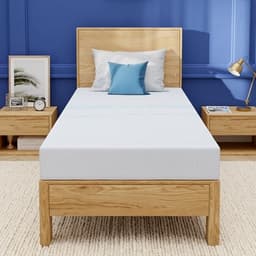
EGOHOME 6" Twin Mattress for Kids (Charcoal Gel)
A certified, fiberglass-free twin for a bunk, a trundle or a first proper bed
The certified middle option: fiberglass-free, CertiPUR-US and OEKO-TEX stated, medium-firm, 75 by 38 by 6 inches, with a 10-year limited warranty published. The listing states opened mattresses cannot be returned, so there is no trial to fall back on.
$114.99 · See it on AmazonSee the roundupPrice as of October 22, 2026. #ad How we’re funded
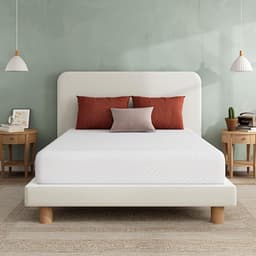
MLILY EGO 6" Twin (Green Tea Memory Foam)
Bunk beds, trundles, daybeds and guest rooms on the tightest budget
The cheapest route onto a certified, fiberglass-free twin, and the one written for bunks, trundles and daybeds. No trial at all — the listing says so in capitals — so buy it when you already know the size and height you need.
$95.99 · See it on AmazonSee the bunk-bed picksPrice as of October 22, 2026. #ad How we’re funded
What we would actually do
If the bed is being bought now: pick one of the three above, keep the cover zipped for its whole life, and put a protector over it for the spills, which is what a protector is genuinely for. If the bed is already in the room and the tags are ambiguous, the honest options are to leave it sealed and stop worrying about a barrier that has not moved, or to replace it — not to investigate it with a zip.
And if your worry is specifically that a protector will solve this, read what a mattress protector can and cannot do about fiberglass first. It is the most common wishful purchase in this category and it does not do the job people buy it for.
Nothing here is medical or safety certification advice. We are a buying guide: we can tell you what each listing states, what each certification covers, and what the federal rule requires. We cannot test a mattress in your house, and we have not.
General guidance, not medical advice. Pillow & Post is written by an enthusiast, not a doctor or chiropractor. Back and joint pain can have serious causes — if yours is severe, persistent, or comes with numbness or weakness, see a qualified professional. A mattress is one piece of the picture, not a treatment.
Frequently asked questions
Do kids' mattresses have fiberglass?
Some do. A mattress sold in the US has to meet the federal open-flame standard at 16 CFR Part 1633, and nothing in that rule exempts a twin or a children's bed. The standard is a performance test, not a materials list, so it does not require fiberglass — but a woven glass-fiber sock is one of the cheapest ways to pass it, which is why it is common. All three of the children's twins we cover state 100% fiberglass-free construction on their listings.
Does the Nectar Kids mattress have fiberglass?
Its Amazon listing states 100% fiberglass-free construction, alongside CertiPUR-US certified foams and OEKO-TEX Standard 100 certified fabrics. That is the maker's published claim and it is the clearest set of statements of any children's bed we cover. What the listing does not do — and no kids' mattress listing we have read does — is name the fire barrier used instead.
Why would a child's mattress contain fiberglass at all?
Because of flammability law, not because of cost-cutting on the comfort layers. The CPSC's guidance explains that 16 CFR Part 1633 limits the size of the fire a mattress set produces in a 30-minute test, and it does not specify which fire-barrier material a maker uses to meet it. Woven glass fiber passes cheaply, so it became the default. Wool, rayon and treated cellulose barriers also pass and cost more.
Does CertiPUR-US or OEKO-TEX mean a kids' mattress has no fiberglass?
No, and this is the trap. CertiPUR-US certifies the flexible polyurethane foam only — it does not address fiberglass fire barriers at all. OEKO-TEX Standard 100 tests materials against a harmful-substances list. A bed can hold both marks and still have a glass-fiber barrier, because the barrier is neither the foam nor a substance on that list. Only an explicit fiberglass-free statement speaks to it.
Is fiberglass dangerous in a mattress?
We are not going to put a number or a risk level on that, because we have no authority to cite that does. What we can say is factual: the problem people report is not the barrier sitting sealed inside a cover, it is glass fibers escaping when the cover is unzipped, torn or washed, after which they are extremely difficult to remove from a room. That is why every piece of advice on this site is to leave the cover zipped.
How do I tell whether my child's mattress has fiberglass?
Read the care tag and the law tag rather than opening anything. A care instruction telling you not to remove the cover is the strongest single signal; a fiber content line naming glass fiber is conclusive. Our full guide walks through four signals in order. Do not unzip the cover to look — that is the one action that turns a sealed barrier into a contaminated bedroom.
Does a mattress protector stop fiberglass?
Not in the way people hope. A protector is a barrier against liquid and allergens on top of the mattress; it does not seal a cover seam and it does not contain fibers that have already escaped. We wrote a whole page on what a protector can and cannot do about this, because it is the most common wishful purchase in the category.
Are organic kids' mattresses automatically fiberglass-free?
In practice the organic tier is where the question goes away, because GOTS and GOLS prohibit the materials a glass-fiber barrier is made from, so those beds pass the flammability rule on wool instead. But that applies to the certified organic beds we cover, which are adult sizes — we have no GOTS or GOLS certified children's twin in the registry, so for a child's bed you are relying on the maker's fiberglass-free statement, not on a standard.
Sources
- CPSC — Mattresses, Mattress Pads & Mattress Sets (business guidance) — Mattresses sold in the US must meet the federal open-flame standard at 16 CFR Part 1633, which limits the size of the fire a mattress set produces in a 30-minute test — a performance requirement that does not specify which fire-barrier material a maker uses to meet it (accessed August 19, 2026)
- CertiPUR-US — Frequently Asked Questions — CertiPUR-US certifies the flexible polyurethane foam only, not the whole mattress, and does not address fiberglass fire barriers (accessed July 23, 2026)
- OEKO-TEX — STANDARD 100 — Textile-safety label: every submitted component tested against 1,000+ harmful substances, with stricter limits the closer the fabric is to skin (accessed July 23, 2026)
- GOTS — Certification & Labeling — Global Organic Textile Standard: whole-product organic-fiber certification (≥70% organic fibers), restricted inputs, and prohibits synthetic/fiberglass fire barriers (accessed July 23, 2026)
Keep reading
Nectar Kids vs MLILY EGO
Two of the three certified twins side by side, row by row, on what each listing states.
Read the comparisonBest non-toxic mattresses for kids
The three certified twins ranked, with what each listing states and what it leaves out.
See the picksHow to tell if a mattress has fiberglass
The four signals on a bed you already own — the care tag phrase, the law tag, the listing and the price.
Read the guideMattresses that state fiberglass-free
Every bed we cover, brand by brand, and whether it names the barrier it uses instead.
See the listBest non-toxic pillows for kids
Why fiberglass is not a pillow question, and what actually decides a child's pillow.
See the picks