How to Sleep With Hip Pain
Why a sore hip is worse at night, which side to sleep on, and what to put between your knees. Then the honest read on whether your mattress is the cause.
How this is funded: we earn an Amazon commission if you buy through our links, at no extra cost to you. It never changes which product we recommend, and we’ll tell you plainly when to skip one. Full disclosure.
A sore hip has a particular relationship with bed. It is often fine while you are moving and worst in the small hours, and the Cleveland Clinic’s physiatrist explains why: motion is what keeps the fluid in a joint circulating, and when you lie still for hours the joint can swell. That is a fact about joints, not about mattresses, and it means no position and no product makes a sore hip behave like a healthy one overnight. What position and surface can do is stop adding to the problem — by not pressing on the hip, and by not letting it sag out of line.
This guide follows the Clinic’s advice for sleeping with hip pain in order: the position, the pillow, then the surface. It then does the thing most hip-pain articles skip, which is help you work out whether your mattress is actually the cause before you spend money on it. None of it is medical advice; the Clinic’s page also covers longer-acting pain relief and daytime exercise, and if the hip is new, severe or comes with swelling or fever, that is a clinician’s question.
Which side, and why it is not the sore one
The Clinic’s starting point is side sleeping with a pillow between the legs. The side you choose matters: lie on the hip that does not hurt, so the painful one is on top and nothing presses on it. Lying on the painful side puts your body weight through the bony point on the outside of that hip, where the tendons and the fluid-filled cushion over the joint sit against the mattress all night. If both hips hurt, you will end up alternating, and the surface under whichever hip is down becomes the deciding factor.
The pillow between the knees is not optional. Without it, the top knee drops toward the mattress, the top leg pulls forward, and the pelvis rotates — a twist that loads the hip joint on top and the lower back at the same time, and holds that load for hours. With a pillow roughly the width of your hips between the knees, the hips stay stacked and the leg stays level. Our sleeping position guide covers the same mechanics for the spine; for the hip it is the single most useful thing on this page.
Why the Clinic says not to lie flat on your back
Back sleeping is usually the position sites recommend for back pain, and the Clinic’s hip-pain advice is to avoid lying flat on your back. The reason is the front of the hip: lying flat with the legs straight holds the hip joint in extension and stretches the front of it for the whole night, which many sore hips do not tolerate. If you can only sleep on your back, the compromise is a low bolster under both knees, which lets the hips flex slightly and the lower back settle. It is the same knee lift an adjustable base provides, and our adjustable bed positions guide covers that route if you already own one.
Stomach sleeping
Stomach sleeping twists the hip and the lower back at once — one leg usually ends up drawn up, the pelvis rotates, and the neck turns to breathe. It is not a position anyone with a sore hip should be trying to keep. If it is the only way you fall asleep, a thin pillow under the pelvis reduces the twist, and our stomach sleeper pillow page covers the head end.
What to look for in the surface under the hip
Here the Clinic’s advice is specific, and it is worth reading precisely. Its physiatrist recommends a firm mattress for hip pain, and adding a foam pad on top if you need it to distribute your weight evenly and keep the joints in alignment. That is a two-layer answer, not a one-word one: a supportive core so the hips do not sag below the ribcage, and a cushioning layer over it so the bony point of the hip is not carrying all the pressure on a hard surface. Firm alone, with no give, is exactly what makes a side sleeper’s hip hurt; soft alone, with no support, is what makes a back sleeper’s hip and lower back ache.
So the surface check is simple. Lie on your side where you usually sleep and press a hand into the mattress beside your hip. If it barely gives, the problem is pressure and you want a dense, cushioning layer on top — dense, because a low-density plush foam compresses fully under the hip and you are back on the hard surface within minutes. If instead the bed visibly dips where your hip goes, the problem is support, a topper will follow the dip, and the answer is the mattress. And for the pillow, the specs that matter are height — roughly the width of your hips — a contour that stays put without a strap, and whether the listing names a foam or textile certification for the material against your skin all night.
The pillow first, then the pad
From our registry, in the order the Cleveland Clinic gives: the pillow between the knees, then the foam layer that distributes weight over a firm bed. Each roundup argues its pick in full.

5 STARS UNITED Knee Pillow for Side Sleepers
Side sleepers who want a certified foam against their skin all night
The contoured between-the-knees block, and the only knee pillow we cover whose listing names both a foam and a textile certification.
$27.95 · See it on AmazonFull reviewPrice as of September 21, 2026. #ad How we’re funded
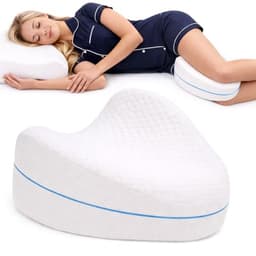
Contour Legacy Leg & Knee Support Pillow
Side sleepers with wider hips, or anyone who sleeps hot with a foam pillow between the legs
Taller and hourglass-shaped, for wider hips — it supports the calf as well as the knee so the top leg stays level.
$32.95 · See it on AmazonFull reviewPrice as of September 21, 2026. #ad How we’re funded
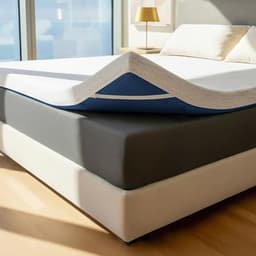
ViscoSoft 3" Select High Density Memory Foam Topper
Softening a too-firm bed for side sleepers with shoulder or hip pressure
The foam pad for a bed that is too hard at the hip: the only topper we cover that publishes a density figure, so it cushions without bottoming out.
$179.95 · See it on AmazonSee the hip-pain topper roundupPrice as of September 21, 2026. #ad How we’re funded
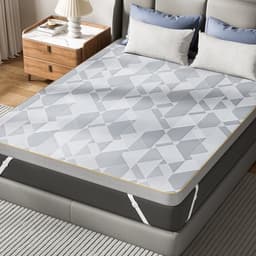
PERLECARE Firm Mattress Topper, 3"
Back and stomach sleepers whose mattress has softened under the hips
For the opposite problem — a bed that lets the hips sag — a firm layer with a stated weight range that holds the pelvis level.
$114.99 · See it on AmazonFull reviewPrice as of September 21, 2026. #ad How we’re funded
How to tell whether the mattress is the cause
Three questions, in order. Does the hip hurt on the side that is pressed into the bed, and ease when you turn over? That is pressure, and it points at a surface with no give — a topper fixes it. Does the hip and the lower back ache together, and does the bed have a visible dip where your hips go? That is support, and it points at a failed core or a bad base — our guide to fixing a sagging mattress tells you which. Is the hip just as sore in a chair, or in a different bed? Then the mattress is probably not the cause, and the Clinic’s other advice matters more than anything on this site.
If the answer is the mattress, our back and hip pain roundupranks the beds that manage cushioning and support at once, and the trial evidence — the Kovacs study in The Lancetfound medium-firm beat firm for low-back pain — is the reason those picks are hybrids with a real comfort layer rather than boards. If the pain runs from the hip down the leg, it may be the nerve rather than the joint, and our guide to sleeping with sciatica adds the one rule that changes.
The rest of the Clinic’s list
The position and the surface are the night-time levers. The Clinic’s physiatrist also recommends pre-bed stretches for the low back, hip flexors and hamstrings, a consistent sleep schedule, regular low-impact exercise such as walking or swimming, and, where a clinician agrees, a longer-acting pain reliever that lasts through the night rather than wearing off at 2 a.m. A knee pillow costs less than any of those take in effort, which is why it comes first here; it is not a substitute for the rest.
General guidance, not medical advice. Pillow & Post is written by an enthusiast, not a doctor or chiropractor. Back and joint pain can have serious causes — if yours is severe, persistent, or comes with numbness or weakness, see a qualified professional. A mattress is one piece of the picture, not a treatment.
Frequently asked questions
Why does my hip hurt more at night?
The Cleveland Clinic's physiatrist explains that joints swell at night: motion keeps the fluid in a joint moving, and when you stop moving for hours the joint can swell more. Add a surface that presses on the outside of the hip or lets it sag out of line, and a hip that was tolerable at 10 p.m. is not at 3 a.m.
What is the best position to sleep in with hip pain?
The Cleveland Clinic recommends starting on your side with a pillow between the legs, on the side that does not hurt, and avoiding lying flat on your back. The pillow stops the top leg dropping forward and rotating the pelvis, which is the movement that strains the hip joint.
Should I sleep on the painful hip or the other one?
The other one, so the sore hip is on top and nothing presses on it. If both hips hurt, alternate sides through the night and pay attention to the surface: a hip that hurts when it is the one pressed into the bed is telling you the mattress is too firm at that point.
Is a firm or soft mattress better for hip pain?
The Cleveland Clinic recommends a firm mattress for hip pain, with a foam pad added on top if you need it to distribute your weight and keep the joints aligned. That is a two-part answer: a supportive core so the hips do not sag, and a cushioning layer so the bony point of the hip does not take all the pressure. Firm alone, with no give, is what makes side sleepers' hips hurt.
Will a mattress topper help hip pain?
If the bed is sound but too hard at the hip, a dense foam topper is the cheapest effective fix and is the pad the Cleveland Clinic mentions. If the bed sags where the hip goes, a topper follows the sag and does not help. Which one you have decides it, and the surface check in this guide tells you.
Does a pillow between the knees help hip pain?
It is the first thing the Cleveland Clinic recommends. Without it, the top knee drops toward the mattress and the pelvis rotates, straining the hip joint and the lower back for as long as you hold the position. A contoured knee pillow stays in place better than a bed pillow through the night.
Sources
- Cleveland Clinic — How To Keep Sore Joints From Ruining Your Sleep (physiatrist Geraldine Dapul, MD; January 2022) — Joints swell at night because motion is what keeps their fluid moving; for hip pain, start on your side with a pillow between the legs and avoid lying flat on your back; recommends a firm mattress with a foam pad added on top if needed to distribute weight and keep the joints aligned (accessed September 18, 2026)
- Cleveland Clinic — Best Sleeping Positions for Pain — Back sleeping puts least pressure on the spine, with a small pillow UNDER the knees so the lower back does not over-arch; side sleepers put a pillow BETWEEN the legs to stop the top leg pulling forward and twisting the torso (accessed August 12, 2026)
- Kovacs et al. — Effect of firmness of mattress on chronic non-specific low-back pain (The Lancet, 2003) — Randomized double-blind trial (n=313): medium-firm mattresses outperformed firm for low-back pain and disability (accessed July 23, 2026)
Keep reading
Best mattress toppers for hip pain
The foam pad the Cleveland Clinic mentions, ranked separately for side sleepers who need give and back sleepers who need support.
See the picksBest mattresses for back and hip pain
When the bed is the cause — hybrids that cushion the hip while holding the back up.
See the picksBest knee pillows for back, hip and sciatica pain
The full roundup of the pillow that goes between the knees, with the certifications each listing states.
See the picksHow to sleep with sciatica
When the hip pain runs down the leg — the same positions, with one extra rule about which side.
Read the guide