Do You Need a Special Mattress for an Adjustable Bed?
Usually not — but the answer comes from how your mattress is built, not from what it is sold as. Here is what bends, what does not, and the checks nobody tells you to run.
How this is funded: we earn an Amazon commission if you buy through our links, at no extra cost to you. It never changes which product we recommend, and we’ll tell you plainly when to skip one. Full disclosure.
Short answer: almost certainly not. There is no separate category of “adjustable bed mattress” you are obliged to buy, and most mattresses sold today will articulate on a base without complaint. But the reason is not that mattresses have changed to suit adjustable beds. It is that the construction which cannotbend — a traditional connected innerspring — is the one that has largely been displaced by foam and pocket-coil builds. If you own one of the older kind, the answer flips.
So the useful version of this question is not “do I need a special mattress” but “is the mattress I own one of the constructions that bends, and is anyone on paper agreeing to that.” Those are two different problems, and the second one is messier than the first.
The three constructions, and which of them flex
Forget the marketing names for a moment and look at what spans the width of the bed.
All-foam. Nothing inside it has to bend except the foam, and foam bends. This is the most flexible construction there is, and it is what most budget bed-in-a-box mattresses are. The thicker the slab the more material has to deform at each hinge, which is a difference of degree rather than a yes or no.
Pocket-coil hybrid.Each coil is wrapped in its own fabric pocket and glued to its neighbors rather than wired to them, so the unit flexes along the gaps between pockets. This is why the hybrid category sits comfortably on a base despite containing steel, and it is the construction most of the beds we cover use — the organic hybrid in our registry states 700 individually wrapped coils, and the budget hybrids state individually wrapped coils with a reinforced perimeter.
Connected innerspring. The coils are joined to each other with helical wire, or formed from one continuous wire, so the support core is a single rigid grid. A grid does not want to fold in two places, and making it do so repeatedly is what deforms it. This is the construction the question is really about, and if you are unsure which you own it is also the one that is easiest to identify: press down firmly in the middle of the bed and see whether the surface eighteen inches away moves with it.
That is structural reasoning rather than a tested finding, and we will label it as ours: we have not flexed a mattress to destruction and no listing we carry publishes a bend-cycle rating. But it is the reasoning the industry’s own compatibility language reflects, and you can check your own bed against it in thirty seconds.
The documentation problem nobody mentions
Here is the thing that surprised us when we went looking. We carry twelve adult and children’s mattresses in our product registry, and read every listing. Not one of them says anything at all about adjustable bases — not “compatible”, not “not recommended”, nothing. The claim you would most want before putting a four-figure purchase on a motorized frame is simply absent from the mattress side of the transaction.
Where it does appear is on the base. The LUCID L300 listing states outright that it works with most foam and hybrid mattresses in a compatible frame, which is the only mattress-type compatibility statement in our whole registry and it comes from the frame maker. That tells you something about who carries the risk. A base maker has an interest in telling you their product works with what you already own; a mattress maker has an interest in not promising anything about equipment they did not build.
The practical consequence: read the base listing for compatibility, and contact the mattress maker directly if you want it in writing for your specific model and size. Do not infer compatibility from silence on a mattress listing, in either direction. Silence is silence, and we mark it as “not published” on every product page here for exactly that reason.
Weight capacity is a shared number, and the mattress eats most of it
This one catches people out. Adjustable bases publish a weight capacity, and that figure is normally a total for everything on the deck — sleepers, mattress and bedding together. The LUCID listing states 750 lb including mattress and bedding; the Sweetcrispy base states 750 lb as well.
Mattresses are not light. The organic hybrid we cover is listed at 92 lb in a queen, and a 12-inch foam or hybrid queen is routinely in the 70 to 100 lb range. So a couple at a combined 400 lb on a 90 lb mattress is already around two-thirds of the way through a 750 lb allowance before the duvet goes on. If you are at the heavier end, our heavier-bodies mattress picks and the capacity figures on each base review are the numbers to work with rather than a guess.
The warranty check you cannot run afterward
Of all the checks on this page this is the one with a deadline. Mattress warranties frequently set conditions on what the bed sits on — a requirement for center support, a spacing limit on slats, and sometimes a restriction on adjustable bases. The FTC’s guidance on federal warranty law requires written warranties to disclose their terms and conditions in plain language, so if the restriction exists it is in the document you were given rather than hidden. Read it before the mattress goes on the base, not after something goes wrong.
Our guide to mattress warranties and sleep trials goes through what these documents typically cover — and the much more common reason a claim fails, which is a sag threshold measured in inches rather than anything to do with a base. Worth knowing both.
What we would actually buy
The base whose listing states what it works with, the alternative when it is out of stock, and the cheap way to test the position before either. Prices are live; we never print a number into the text.
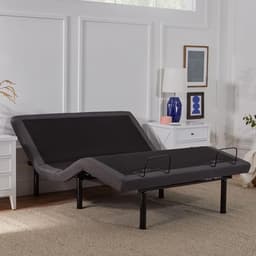
LUCID L300 Adjustable Bed Base
A first adjustable base to get head-and-foot positioning for a bad back
The only base in our registry whose own listing states which mattress types it works with — most foam and hybrid mattresses, in a compatible frame. It also publishes the fullest spec set of the three: 750 lb capacity including mattress and bedding, a 10-year limited warranty, and battery lowering in a power cut.
Full review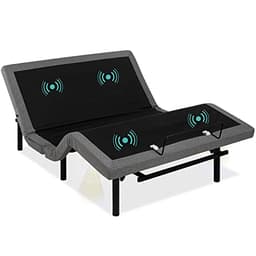
Best Choice Products Ergonomic Adjustable Bed Frame
A widely stocked alternative when the LUCID isn't available
The widely stocked middle option to fall back on when the LUCID is unavailable in your size, which happens. Head-and-foot articulation with a wireless remote; its listing is thinner on published specs than the LUCID's, and we say so on its review page.
$399.99 · See it on AmazonFull reviewPrice as of October 21, 2026. #ad How we’re funded
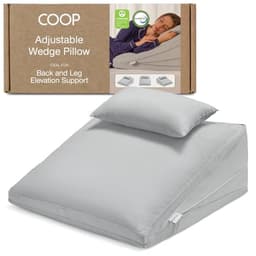
Coop Home Goods Adjustable Wedge Pillow
Anyone who does not already know what incline suits them
Run this test before you buy a base at all. Three stacking inserts plus a shredded-fill top mean the incline is a setting rather than a purchase, and Coop publishes a 100-night trial, so a wrong guess costs nothing. If the raised position does not help your back, the compatibility question never arises.
$99.00 · See it on AmazonSee the wedgesPrice as of October 21, 2026. #ad How we’re funded
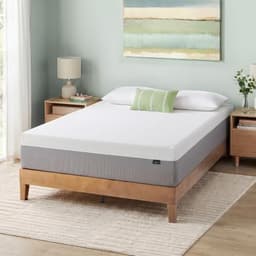
Zinus 12" Green Tea Essential Memory Foam
Back and combination sleepers who want certified, fiberglass-free foam on a budget
If your current mattress turns out to be a connected innerspring, an all-foam bed is the construction with the least inside it to resist a bend — and this is the cheapest certified, fiberglass-free one we cover. Its listing says nothing either way about base use, like almost every mattress listing, so confirm with Zinus for your size before relying on the warranty.
$219.99 · See it on AmazonFull reviewPrice as of October 21, 2026. #ad How we’re funded
Five things worth doing in the right order
1. Test the position first. Everything else on this page is moot if the raised-head, raised-knee position does not actually help you. A wedge or a leg ramp answers that for a fraction of the cost, and our positions guide covers which angles to try. The Cleveland Clinic’s own note on adjustable models is that they give a lot of control but tend to be pricey — a fair summary of why the cheap test is worth running.
2. Identify your support core.Press firmly in the middle of the bed and watch whether the surface a foot and a half away lifts or moves with it. A connected coil grid telegraphs across the bed; pockets and foam do not. If you still have the label or the listing, the words to look for are “individually wrapped” or “pocket” coils, which is the flexible kind.
3. Measure the thickness.Not because there is a magic number — there is not, and nobody we read publishes one — but because thickness is the variable that decides how well the mattress follows the articulation. If you are choosing a new bed to go on a base, a 10 to 12 inch profile is the easy end of the range rather than a 14 inch pillow-top.
4. Add up the weight.Sleepers, plus mattress, plus bedding, against the base’s stated capacity. Then check whether the base has retainer bars or rails, because an articulated deck pushes the mattress toward the foot of the bed every time the head rises.
5. Read the warranty. Last in the list and first in consequence, because it is the only item here you cannot revisit later.
One thing an adjustable base does not fix
Firmness. If your mattress is wrong for your back, articulating it does not make it right — the randomized Lancettrial that compared firmness grades for chronic low-back pain found medium-firm outperformed firm, and no amount of head elevation changes which grade you are lying on. The Cleveland Clinic’s buying advice is to start on the firmer side and adjust with a topper if needed, which is a cheaper lever than a motor. Our firmness guide works out where you should be, and mattress or topper is the decision between the two cheap fixes. If the complaint is higher up, our mattress picks for neck painrank the same field on a different criterion — how far the shoulder sinks, which is what decides the pillow height that keeps your head level.
It also does not fix a sagging bed. A dip is the support core failing, and an articulated deck under a failed core gives you a dip at an angle. How to fix a sagging mattress has the measurement that tells you whether yours has gone, and the repairs that genuinely work.
None of this is medical advice, and we have not tested any base-and-mattress pairing ourselves. Every specification quoted above is read from a product listing on a dated visit, and every structural argument is labeled as our reasoning rather than a published finding.
General guidance, not medical advice. Pillow & Post is written by an enthusiast, not a doctor or chiropractor. Back and joint pain can have serious causes — if yours is severe, persistent, or comes with numbness or weakness, see a qualified professional. A mattress is one piece of the picture, not a treatment.
Frequently asked questions
Do you need a special mattress for an adjustable bed?
Usually no. The thing that matters is construction, not a product label: all-foam mattresses and pocket-coil hybrids bend because nothing rigid spans the width of the bed, and those two constructions cover most mattresses sold today. What does not bend is a traditional connected innerspring, where the coils are joined to one another by wire and the whole unit behaves as a single grid. There is no separate category of mattress you have to buy — there is a construction you have to avoid.
Can you put a memory foam mattress on an adjustable bed?
An all-foam mattress is the most flexible construction there is, with nothing inside it that has to bend except the foam itself. That makes it the easiest kind to put on an articulated base. The caveat is documentation rather than physics: most mattress listings, including almost all of the ones we cover, say nothing either way about base use, so confirm with the maker for your specific model and size — especially if you want the warranty to stay intact.
Will an adjustable base ruin my mattress?
Flexing a mattress that is built to flex is not what damages it. Two things can: forcing a rigid connected innerspring to bend repeatedly, which deforms the coil grid, and exceeding the base's stated weight capacity, which is usually quoted as a total including the mattress and bedding. The LUCID and Sweetcrispy bases we cover both state 750 lb on that basis. Mattresses are heavy — the organic hybrid we cover is listed at 92 lb in a queen — so the mattress is a real share of that number.
Does using an adjustable base void a mattress warranty?
It can, and it is worth checking before rather than after. Some mattress warranties set conditions on the support underneath the bed, and the FTC's own guidance to businesses on federal warranty law is that written warranties must disclose their terms and conditions in plain language — which means the restriction, if there is one, is in the document you were given. Read it. Our guide to mattress warranties and sleep trials covers what these documents typically do and do not cover.
What thickness mattress is best for an adjustable bed?
There is no single published number, and we are not going to invent one. The structural logic is straightforward: the thicker the mattress, the more material has to deform at each hinge, so a very thick bed conforms less to the articulation and puts more stress on itself doing it. Most bed-in-a-box mattresses sit in the 10 to 14 inch range, and the beds we cover are 11 or 12 inches. None of their listings publishes a maximum thickness for base use.
Will my mattress slide off an adjustable base?
It can, which is why retainer bars or bed rails matter. An articulated deck tips the mattress toward the foot of the bed every time the head goes up, and a slick mattress base fabric on a steel deck has very little grip. Of the bases we cover, the Sweetcrispy listing names bed rails to stop the mattress sliding. If your base has none, that is the accessory to look for.
Do I need an adjustable bed at all for back pain?
Not necessarily, and the cheap test comes first. The Cleveland Clinic notes that adjustable models give a lot of control to meet changing needs but tend to be pricey. A wedge pillow under the torso or a ramp under the knees reproduces most of the position for a fraction of the cost, and if the position does not help, you have saved yourself the whole question.
Sources
- Cleveland Clinic — How To Choose a Mattress for Better Sleep (chiropractor Andrew Bang, DC; May 2023) — Recommends a medium-firm mattress and starting on the firmer side so a topper can adjust it; notes adjustable models give a lot of control to meet changing needs but tend to be pricey; suggests replacing a mattress around every 10 years and checking the return policy before buying (accessed September 18, 2026)
- Cleveland Clinic — Best Sleeping Positions for Pain — Back sleeping puts least pressure on the spine, with a small pillow UNDER the knees so the lower back does not over-arch; side sleepers put a pillow BETWEEN the legs to stop the top leg pulling forward and twisting the torso (accessed August 12, 2026)
- FTC — Businessperson's Guide to Federal Warranty Law — Under the Magnuson-Moss Warranty Act a written warranty on a consumer product must disclose its terms and conditions in plain language and be designated 'full' or 'limited'; the FTC sets the standards a 'full' warranty must meet (accessed August 19, 2026)
- Kovacs et al. — Effect of firmness of mattress on chronic non-specific low-back pain (The Lancet, 2003) — Randomized double-blind trial (n=313): medium-firm mattresses outperformed firm for low-back pain and disability (accessed July 23, 2026)
Keep reading
Does the bed base matter for back pain?
The question underneath this one: what the thing holding your mattress up does to your spine.
Read the guideBest adjustable beds for back pain
The bases themselves, ranked on articulation, published capacity and what each listing actually documents.
See the picksAdjustable bed positions for back pain
Once the base is in, which angles to actually use — and the one that takes load off the lower back.
Read the guideBest wedge pillows
The cheap way to test an incline before committing to a motorized base.
See the wedgesMattress warranties and sleep trials
What these documents cover, what voids them, and why the base you use is sometimes in the fine print.
Read the guideBest adjustable beds for seniors
Where getting in and out of bed matters as much as the sleeping position.
See the picks