How to Sleep With Shoulder Pain
Why a sore shoulder is worst at 3 a.m., which side to lie on, and the two pillows that do most of the work. Then the honest read on whether your mattress is the cause.
How this is funded: we earn an Amazon commission if you buy through our links, at no extra cost to you. It never changes which product we recommend, and we’ll tell you plainly when to skip one. Full disclosure.
Why the shoulder is worst in the small hours
Two things are happening and only one of them is about pressure. The obvious one is that a side sleeper puts a substantial share of their body weight through one shoulder for hours, and an already-irritated joint does not enjoy that. The less obvious one is that joints stiffen when they are still. The Cleveland Clinic’s physiatrist explains it plainly: motion is what keeps the fluid in a joint moving, so a joint held in one position for hours swells and gets sorer, which is why so many people report their shoulder being fine at bedtime and waking them at three in the morning.
That matters for what you buy, because it means some of the pain is not caused by your mattress and will not be fixed by one. The night-time levers you actually control are the position you hold, what supports the arm, and how much the surface under the shoulder gives. In that order.
The positions, in order of preference
On the opposite side, with the sore shoulder up. The simplest and usually the best. Nothing presses on the painful joint, and you stay in a position most people already find comfortable. The catch is what the top arm does: left alone it falls across the body, which rolls the top shoulder forward and closes the space at the front of the joint. Give it something to rest on at roughly chest height and the position holds.
On your back.This takes the load off both shoulders, which makes it the right answer when both hurt. The Cleveland Clinic notes that back sleeping puts the least pressure on the spine, with a small pillow under the knees so the lower back does not over-arch. The shoulder-specific addition is a small pillow under each upper arm, so the shoulders do not roll backward and hang open all night — a surprisingly common source of morning ache in people who switched to back sleeping to fix the problem.
On the sore side.Avoid if you can. If you cannot — and plenty of people simply cannot sleep any other way — the fix is the surface rather than the position: the shoulder needs somewhere to sink into, which is what the second half of this page is about.
On your stomach. The worst option for this problem. It holds both shoulders in internal rotation and forces the neck into a sustained twist; the Cleveland Clinic specifically warns against sleeping face-down with the head turned. If you are a committed stomach sleeper, our neck-pain guide covers how to transition without lying awake for a fortnight.
Pillow height decides how much work the shoulder does
Here is the part people miss. On your side, if the pillow is too low, your head sags toward the mattress and the down-side shoulder ends up taking both the weight of your torso and part of the weight of your head, with the joint jammed up toward your ear. If the pillow is too high, the neck bends the other way and the muscles across the top of the shoulder hold a stretch all night. Neither of those is a mattress problem and neither is fixed by a new mattress.
The target, in the Clinic’s words, is a pillow that keeps the head and neck aligned with the rest of the spine — and the right height depends on the bed, because a firmer mattress lets the shoulder sink less and therefore needs a taller pillow. Our pillow loft guide has the measuring method; if your shoulder is broad and your bed is firm, expect to need more loft than the pillow aisle assumes.
The four objects that make these positions work
Each of these does one specific job from the list above: hold the top arm, fill the gap under the neck, or give the shoulder somewhere to sink. They are registry picks we cover in full elsewhere — nothing here is a treatment, and none of them is a substitute for having a painful shoulder looked at.
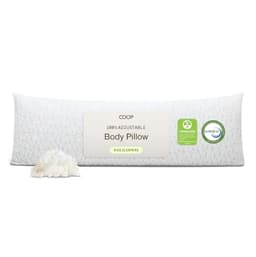
Coop Home Goods Original Adjustable Body Pillow (20" x 54")
Side sleepers who want to tune how much support sits under the top knee
Holds the top arm at chest height so the shoulder stops rolling forward, and the top knee level with the hip at the same time. Its fill comes out, so the height under your arm is a setting rather than a lottery, and it names CertiPUR-US and GREENGUARD Gold.
$99.00 · See it on AmazonSee the body pillow roundupPrice as of October 5, 2026. #ad How we’re funded
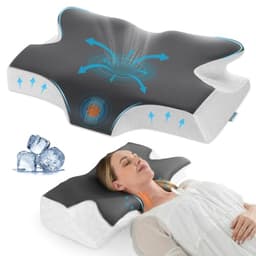
Elviros Cervical Memory Foam Pillow (Cooling)
Side sleepers whose neck kinks on a flat pillow
For the down-side shoulder: a dual-height contour that fills the neck-to-mattress gap, with cutouts that give the shoulder somewhere to go instead of forcing it up under your ear. A fixed loft, so it works best when its height matches your shoulder width.
Full review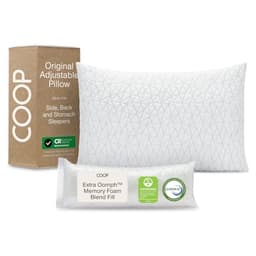
Coop Home Goods Original Adjustable Pillow
Anyone unsure of their loft, or who changes position through the night
The safer buy if you are not sure of your loft or you change position through the night — unzip it and remove fill until your head sits level. The height under your head is what decides how much work the down-side shoulder does.
$89.00 · See it on AmazonFull reviewPrice as of October 5, 2026. #ad How we’re funded
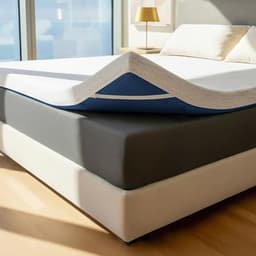
ViscoSoft 3" Select High Density Memory Foam Topper
Softening a too-firm bed for side sleepers with shoulder or hip pressure
When the surface is the problem rather than the position: a dense memory-foam layer that lets the shoulder sink into a bed that is otherwise too hard, without turning the whole mattress plush under your hips.
$179.95 · See it on AmazonFull reviewPrice as of October 5, 2026. #ad How we’re funded
Is it the mattress?
Three questions, in order. Does the shoulder hurt most on the side pressed into the bed, and ease within a few minutes of turning over? That is pressure, and it points at a surface with no give at the shoulder — a topper fixes it for a fraction of the cost of a bed. Does the shoulder ache together with the neck, and is the pain there whichever way you lie? That is more likely to be loft and position than the mattress. Is the shoulder just as sore sitting in a chair, or after a day of using it? Then the bed is probably not the cause at all, and the sleeping position is damage control rather than treatment.
If the answer is the surface, the direction is clear and narrow: you want give at the shoulder without losing support under the hips. That is a medium-firm bed with a real comfort layer, not a plush one — the Kovacs trial in The Lancet found medium-firm outperformed firm for low-back pain, and sinking the hips to rescue a shoulder trades one problem for a worse one. Our shoulder-pain mattress roundup ranks the beds that manage both, and our side-sleeper back-pain picks cover the same geometry from the lumbar end. Try the topper first: it is the cheaper experiment, and if it works you have saved several hundred dollars.
What this page cannot tell you
A great deal of shoulder pain is rotator-cuff related, and some of it is referred from the neck rather than generated in the joint at all — which is why pain running down the arm, numbness or tingling, weakness, or a shoulder that gives way belong in a clinician’s hands and not in a shopping decision. The Cleveland Clinic lists numbness or tingling in the arms, weakness or loss of coordination, and pain following an accident among the signs to act on promptly. Night pain that does not change at all with position is another: if nothing you do to the bed makes any difference, the bed is not the variable.
General guidance, not medical advice. Pillow & Post is written by an enthusiast, not a doctor or chiropractor. Back and joint pain can have serious causes — if yours is severe, persistent, or comes with numbness or weakness, see a qualified professional. A mattress is one piece of the picture, not a treatment.
Frequently asked questions
What is the best sleeping position for shoulder pain?
On the side that does not hurt, with the painful shoulder on top and something to rest the top arm on — or flat on your back with a small pillow under the upper arm. The position to avoid is lying directly on the sore shoulder, which compresses the joint for hours.
Why does shoulder pain get worse at night?
Partly because you are lying on it, and partly because joints are quieter at night in a way that works against them. The Cleveland Clinic's explanation is that motion is what keeps joint fluid moving, so a joint held still for hours swells and stiffens — which is why the pain peaks in the small hours rather than at bedtime.
Should I sleep on my back or my side with shoulder pain?
Back sleeping takes all the load off both shoulders and is the safest default, but it lets the shoulder roll backward and hang open, so prop the upper arm on a small pillow. Side sleeping on the good side works well if you support the top arm; without that support the top shoulder rolls forward across your chest.
Is a firm or soft mattress better for shoulder pain?
Softer at the shoulder, but not soft overall. A side sleeper's shoulder needs to sink into the surface so the spine stays straight; a hard surface leaves it propped up and bearing pressure. The target is a medium-firm bed with a comfort layer that gives at the shoulder — not a plush bed that lets the hips sink too.
Does a body pillow help shoulder pain?
For side sleepers, often more than a new head pillow does. The top arm falling across the body rolls the top shoulder forward and closes the space in front of the joint; hugging a body pillow holds that arm out at roughly chest height. It also keeps the top knee level with the hip, which steadies the whole position.
When should I see someone about shoulder pain?
This page is general information, not medical advice. Pain that follows an injury, a shoulder you cannot raise or that gives way, numbness or tingling down the arm, or night pain that does not change with position are all reasons to get it looked at rather than to buy a pillow.
Sources
- Cleveland Clinic — How To Keep Sore Joints From Ruining Your Sleep (physiatrist Geraldine Dapul, MD; January 2022) — Joints swell at night because motion is what keeps their fluid moving; for hip pain, start on your side with a pillow between the legs and avoid lying flat on your back; recommends a firm mattress with a foam pad added on top if needed to distribute weight and keep the joints aligned (accessed September 18, 2026)
- Cleveland Clinic — Best Sleeping Positions for Pain — Back sleeping puts least pressure on the spine, with a small pillow UNDER the knees so the lower back does not over-arch; side sleepers put a pillow BETWEEN the legs to stop the top leg pulling forward and twisting the torso (accessed August 12, 2026)
- Cleveland Clinic — Neck Pain: 6 Common Causes and Treatments — Advises that back and side sleepers use a pillow that keeps the head and neck aligned, and warns against sleeping on the stomach with the head turned. Names numbness or tingling in the arms, weakness or loss of coordination, pain after an accident, and pain with fever or unexplained weight loss as reasons to seek care promptly (accessed September 18, 2026)
- Kovacs et al. — Effect of firmness of mattress on chronic non-specific low-back pain (The Lancet, 2003) — Randomized double-blind trial (n=313): medium-firm mattresses outperformed firm for low-back pain and disability (accessed July 23, 2026)
Keep reading
Best mattresses for shoulder pain
When the surface is the cause — beds with enough give at the shoulder to stop the pressure.
See the picksBest pillows for neck and shoulder pain
The full pillow roundup for the joint that gets squashed and the neck that pays for it.
See the picksBest body pillows for side sleepers
The pillow that holds the top arm at chest height instead of letting it fall across you.
See the picksBest toppers for side sleepers
The cheap experiment when the bed is sound but too firm at the shoulder.
See the picks