Mattress Pad vs Mattress Topper
Three different products get sold under both names, and only one of them changes how your bed feels. Here is how to tell them apart before you buy the wrong one.
How this is funded: we earn an Amazon commission if you buy through our links, at no extra cost to you. It never changes which product we recommend, and we’ll tell you plainly when to skip one. Full disclosure.
Three products, one aisle, interchangeable names
This confusion is not your fault. Search for any of these three terms and you will get listings for all three, because product titles are written for search traffic rather than for accuracy: “mattress pad topper protector cooling” is a real style of title. So start from what each object physically does, not from what it is called.
A protector is a barrier. Its job is to stop liquid and allergens reaching the mattress, and the good ones are thin enough that you cannot feel them through a sheet. It changes nothing about how the bed feels, by design.
A padis a barrier with a bit of padding — a quilted layer of fill, usually well under an inch, often with waterproofing underneath. It takes the hard edge off a surface and protects at the same time. It does not change support.
A topper is two to four inches of foam or latex whose entire purpose is to change how the bed feels and how your weight is carried. It is the only one of the three that can move a mattress meaningfully in either direction.
Which one your symptom points at
“I want to keep my mattress clean, or keep its warranty valid.”Protector. This is the cheapest and easiest of the three decisions, and the warranty argument is stronger than the hygiene one — see do I need a mattress protector.
“My bed is almost right, just slightly harsh on the surface.” Pad. A quilted cotton pad is enough for a surface that feels a little unforgiving without being wrong, and it does the protection job at the same time.
“My shoulder or hip aches where it presses.” Topper, the softening kind, and high density so it does not compress flat under a bony point. Our toppers for shoulder pain and toppers for hip pain pages cover those two joints specifically.
“My hips sink and my back aches in the morning.” Topper, the firming kind — a thin comfort surface over a firm base, which adds stability rather than sinkage. Ranked at best firm mattress toppers.
“There is a visible dip in my mattress.” None of the three. Read how to fix a sagging mattress, because a topper laid over a hollow is flexed into that hollow every night and reproduces it.
“Someone wets the bed.” Protector, and the genuinely waterproof kind rather than water-resistant. A foam core that has been soaked cannot be dried or washed, which is why this is the one case where a protector is not an optimization.
How to read a listing in ten seconds
Find the thickness. It is the only reliable tell. Under an inch: protector or pad, whatever the title says. Two inches and up: topper.
Find the vocabulary. Protectors and pads talk about waterproofing, pocket depth, GSM and noiselessness. Toppers talk about firmness, density, support and feel. A listing that talks about both is usually a pad trying to attract topper searches.
Find the certification, and check what it covers. On a protector or pad, the relevant marks are textile ones: OEKO-TEX STANDARD 100 tests submitted components against more than a thousand harmful substances with stricter limits the closer a fabric sits to skin, and GOTS is the whole-textile organic standard. On a topper, the relevant mark is usually CertiPUR-US, which covers the flexible polyurethane foam and not the cover. Our certification decoder has the full scopes.
One thing you can stop worrying about on all three: fiberglass. The federal open-flame standard applies to mattresses and mattress sets, so none of these three products has a fire barrier to build.
Using them together, in the right order
You can have all three on one bed, and the order is mattress, topper, protector, sheet. People get this wrong in a specific way: they put the protector directly on the mattress and the topper on top of it, which protects the mattress from nothing that happens on the bed and leaves the expensive foam layer exposed and unwashable.
Two practical consequences. The protector has to fit the mattress plusthe topper, so a 15-inch pocket may not reach over a 12-inch hybrid with a 4-inch topper on it — measure the stack, not the bed. And your sheets have to clear the same height, which is the most common unbudgeted cost of buying a topper at all.
One of each, so the difference is concrete
Two barrier products and two toppers, chosen to show what each class actually is: a thin certified protector that changes nothing about the feel, a quilted cotton pad that softens slightly while protecting, and the two toppers that move a bed in opposite directions.
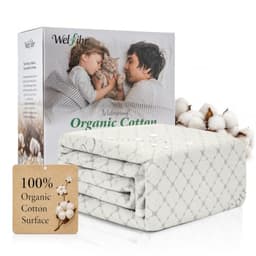
Welfibr Organic Cotton Surface Waterproof Mattress Protector (Queen)
The certified default — quiet, breathable, and cheap enough that skipping a protector makes no sense
A protector in the strict sense: an organic-cotton surface over a TPU membrane the listing describes as noiseless, OEKO-TEX Standard 100 certified, thin enough that you do not feel it. It protects and it changes nothing about how the bed sleeps.
$38.99 · See it on AmazonSee the roundupPrice as of October 21, 2026. #ad How we’re funded
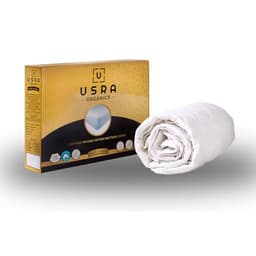
USRA Quilted Waterproof Cotton Protector (Queen)
Anyone who wants a padded, cotton-filled protector that softens the surface slightly
The pad in the group, and the clearest example of the overlap: 300 GSM quilted 100% cotton with cotton wadding over a waterproof backing, so it protects and softens the surface slightly. It also publishes its OEKO-TEX certificate number, which turns the badge into something checkable.
$69.99 · See it on AmazonSee the roundupPrice as of October 21, 2026. #ad How we’re funded
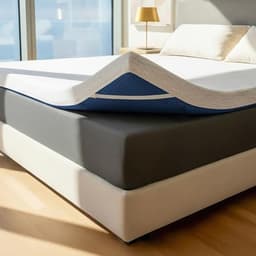
ViscoSoft 3" Select High Density Memory Foam Topper
Softening a too-firm bed for side sleepers with shoulder or hip pressure
A topper that softens: 3 inches of high-density memory foam, enough to genuinely change a too-firm bed rather than add a thin pad, with CertiPUR-US named for the foam. Nothing a protector or pad does resembles this.
$179.95 · See it on AmazonFull reviewPrice as of October 21, 2026. #ad How we’re funded
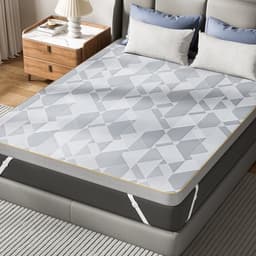
PERLECARE Firm Mattress Topper, 3"
Back and stomach sleepers whose mattress has softened under the hips
A topper that firms: a thin memory-foam surface over a firm base, the right order for resisting sinkage in a bed that has softened, with CertiPUR-US for the foam and OEKO-TEX for the cover. The listing warns of 24 to 48 hours of airing and publishes no warranty.
$129.99 · See it on AmazonSee the firm picksPrice as of October 21, 2026. #ad How we’re funded
What none of them can do
No layer on top of a mattress adds structural support to a mattress that has lost it. A protector is too thin to matter, a pad is too thin to matter, and a topper follows the contour of whatever is underneath it — which is why a topper over a dip feels better for a few weeks and then feels like the dip again.
The other limit worth stating: none of them changes your pillow. If you add a topper and your shoulder starts sinking further into the bed, your head drops with it and the pillow that was right is now too tall. The Cleveland Clinic’s guidance is explicit that correct pillow thickness depends on how firm the surface is, so re-check it after any change — our pillow loft guide covers the measurement.
And if none of the three is the answer, the honest next page is mattress or topper, which works through whether the bed itself is finished.
General guidance, not medical advice. Pillow & Post is written by an enthusiast, not a doctor or chiropractor. Back and joint pain can have serious causes — if yours is severe, persistent, or comes with numbness or weakness, see a qualified professional. A mattress is one piece of the picture, not a treatment.
Frequently asked questions
What is the difference between a mattress pad and a mattress topper?
Thickness, and therefore purpose. A pad is a thin quilted layer — typically well under an inch of fill — that adds a little softness and usually some protection, and leaves the support of the bed essentially unchanged. A topper is two to four inches of foam or latex bought specifically to change how the bed feels and how your weight is carried. If a product's job is to protect, it is a pad or a protector; if its job is to change the feel, it is a topper.
Is a mattress pad the same as a mattress protector?
Not quite, although the words are used interchangeably in product titles. A protector's job is purely barrier — waterproofing and allergens — and the good ones are thin enough that you cannot feel them. A pad adds a layer of quilted fill, so it protects and softens slightly. One of the protectors we cover is genuinely both: a 300 GSM quilted cotton pad with a waterproof backing.
Which one do I need for back pain?
A topper, if any of the three. Back pain in bed is a support-and-alignment problem, and neither a protector nor a pad changes the forces on your spine — they are too thin to. The topper decision then splits in two: softer if a bony point is being pressed into a too-firm surface, firmer if your pelvis is sinking into a bed that has softened. Our topper pages separate those cases explicitly.
How do I tell which one a listing is selling?
Read the thickness, not the title. Under about an inch, you are looking at a protector or a pad whatever it is called. Two inches and up, it is a topper. Then check the second tell: does the listing talk about waterproofing and deep pockets, or about firmness, density and support? Those are two different products describing two different jobs.
Can you use a mattress protector and a topper together?
Yes, and the order matters: the protector goes over the topper, not under it. Putting it underneath protects the mattress from nothing that lands on the bed, and leaves the layer you actually sleep on unprotected and unwashable. The practical catch is pocket depth — a protector has to fit the mattress plus the topper, so measure both before buying.
Do I need deep-pocket sheets for a topper?
Almost always, from about 3 inches of added height upward, and definitely at 4 inches. This is the most common unbudgeted cost of buying a topper. A protector adds no meaningful height; a quilted pad adds a little.
Will a pad or protector void my mattress warranty?
No — the opposite. Mattress warranties commonly exclude stained or soiled mattresses, and under federal warranty law those terms have to be disclosed in plain language and the warranty designated full or limited, so the exclusion is written down rather than implied. A protector is how you stay inside that clause. What can affect a warranty is using the wrong base or frame, which is a different issue.
Can a pad or topper fix a sagging mattress?
Neither can. A thin pad does nothing structurally, and a topper follows the dip — it feels better for a few weeks and then reproduces the same hollow, because the fault is underneath it. If you can see a trench when you strip the bed, the money belongs in a mattress.
Sources
- Cleveland Clinic — How To Choose a Mattress for Better Sleep (chiropractor Andrew Bang, DC; May 2023) — Recommends a medium-firm mattress and starting on the firmer side so a topper can adjust it; notes adjustable models give a lot of control to meet changing needs but tend to be pricey; suggests replacing a mattress around every 10 years and checking the return policy before buying (accessed September 18, 2026)
- CertiPUR-US — Frequently Asked Questions — CertiPUR-US certifies the flexible polyurethane foam only, not the whole mattress, and does not address fiberglass fire barriers (accessed July 23, 2026)
- OEKO-TEX — STANDARD 100 — Textile-safety label: every submitted component tested against 1,000+ harmful substances, with stricter limits the closer the fabric is to skin (accessed July 23, 2026)
- GOTS — Certification & Labeling — Global Organic Textile Standard: whole-product organic-fiber certification (≥70% organic fibers), restricted inputs, and prohibits synthetic/fiberglass fire barriers (accessed July 23, 2026)
- FTC — Businessperson's Guide to Federal Warranty Law — Under the Magnuson-Moss Warranty Act a written warranty on a consumer product must disclose its terms and conditions in plain language and be designated 'full' or 'limited'; the FTC sets the standards a 'full' warranty must meet (accessed August 19, 2026)
Keep reading
Best mattress toppers for back pain
If the answer is a topper: the whole field, ranked on which direction it moves your bed.
See the picksBest non-toxic mattress protectors
If the answer is a protector: three certified options, including one that is also a thin pad.
See the picksDo I need a mattress protector?
The warranty clause that makes the cheapest of the three products the easiest decision.
Read the guideMattress or topper?
One level up: whether the surface is the problem at all, or the bed under it.
Read the guide